

How long has it been since law school started? Three months? Six months? A year? I could argue any of them persuasively. I am in law school, after all.
As it turns out, it has only been a month and a half!1 That’s absolutely crazy!
The first cold call already feels like ancient history, and even my small habits have changed: I tap my wallet when getting on the bus, and no longer mistakenly tap my phone (my transit pass is now a physical card). I don’t just scroll to the very bottom when selecting an address drop down (Washington is near the bottom of the list of states. Massachusetts is not).
The summer is already a blur too. I remember waiting at an intersection in Shenzhen to capture the evening traffic. When was that? Late May? Early August?

If a month and a half already feels like a year, how much of it will I remember in ten years? In fifty? And how much could anyone else piece together?
An entire society in fast-forward
Leslie Chang’s “Factory Girls” tries to answer that question for an entire city. It follows the lives of migrant women from rural villages in China, who have gone to work in factories in the city of Dongguan, just north of that Shenzhen intersection.
The factory girls are perhaps the most “high-agency” people around. They switch jobs. Move to a different part of town. Bluff their way into an industry or position they have zero experience in. Take courses after work. Copy down sections of self-help books in their journals with the same devotion as scholars copying Buddhist or Confucian texts.
They. just. don’t. give. up.
The city around them moved just as fast, to the point where Chang bought two city maps with bus schedules and found that the routes on both had already changed. Studies of migrant workers from the mid-1990s described a world that no longer existed a decade later. In her words, “things were happening too quickly to be written down.”

My family’s fast-forward
Growing up, my ancestors were frequently cited as mythical figures or cautionary tales, similar to a fairy tale (”your grandfather ate shrimp chips instead of his diabetes medicine… and died!” or “your great-grandfather fought the Japanese Empire and became a mayor after liberation!”).
This summer in Korea, I went looking for the true version. Our extended family was massive (my great-grandmother’s sister alone had eight kids), so I decided to take the logical approach to reduce the search space: focus on the most legendary and ancient ancestors. This meant that my ancestor that supposedly was a mayor would take priority over the five that did an MBA in the 90s and went into investment banking. Enlightened by the wisdom of Leslie Chang and armed with Claude Code, I set out to sift fact from legend.
Some of the legends were true.
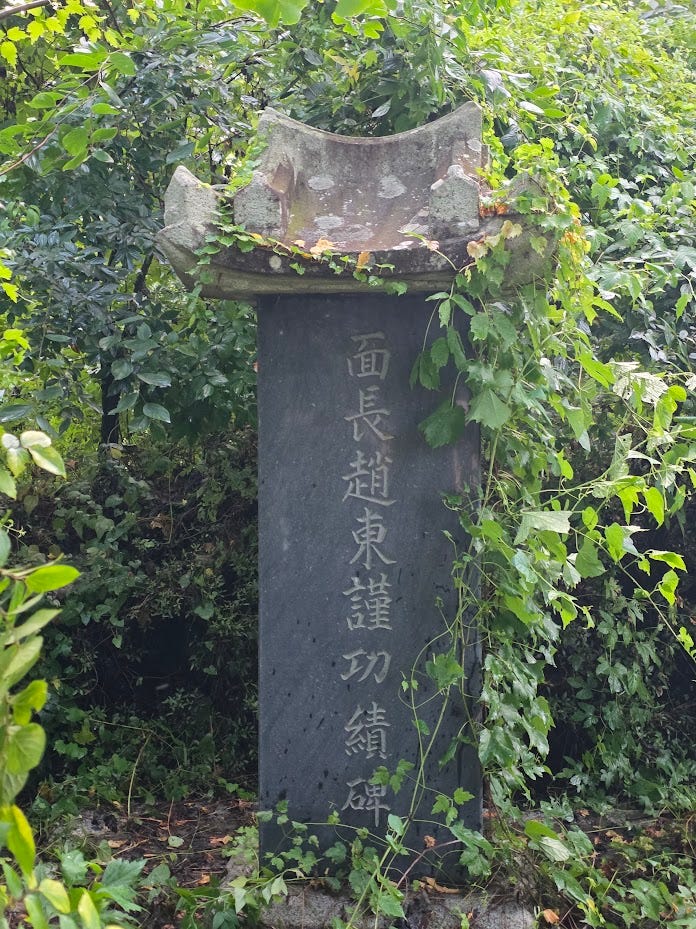
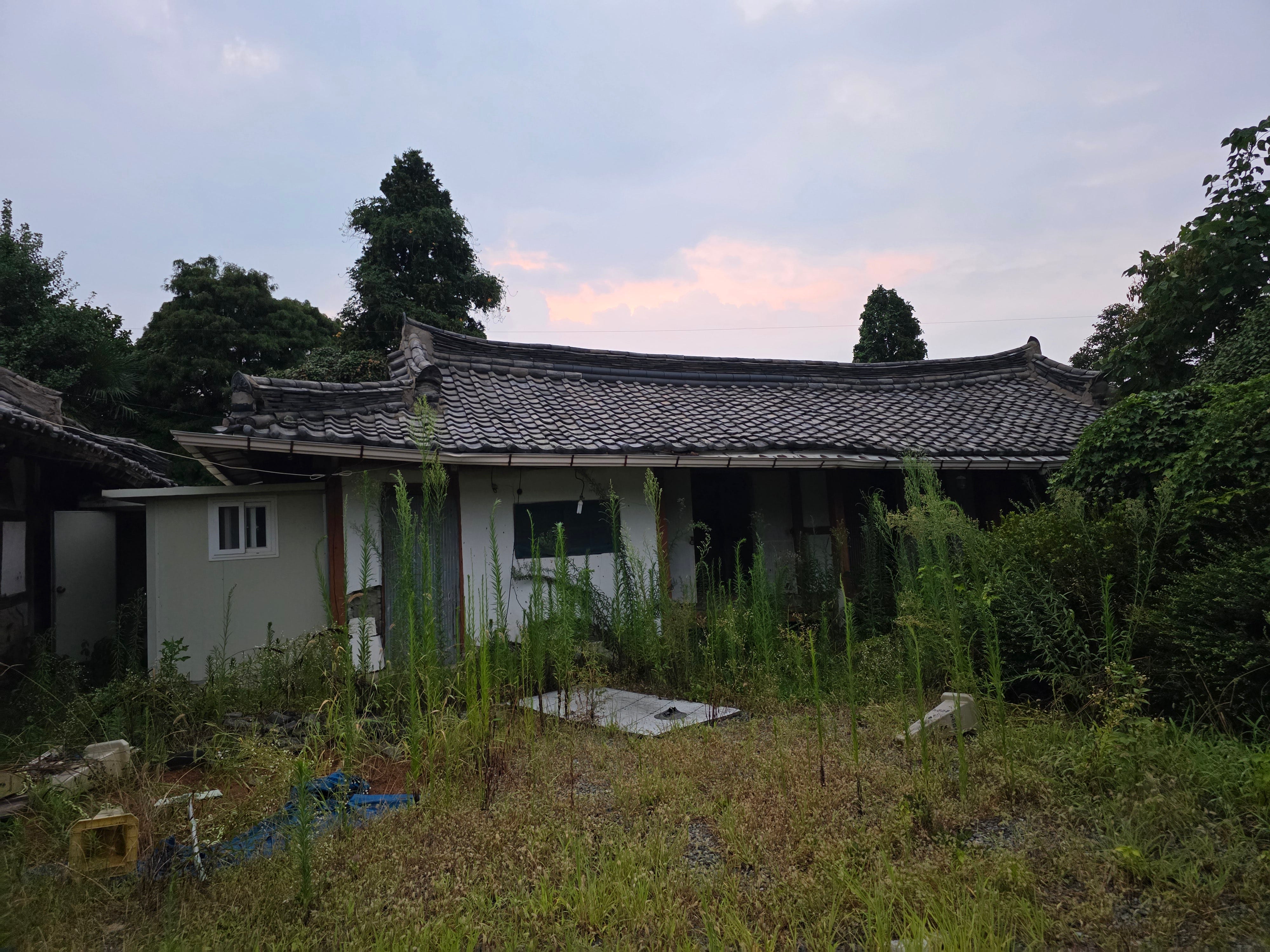
By the standards of rural Korea in the early 1960s, my great-grandfather, Cho Dong-keun, and his wife, Kim Eui-soon, were affluent.2 Cho was mayor of the town of Byeong-yeong and ran several businesses as well. This meant that they had a house with a clay roof, as opposed to a straw roof. The house had electricity and a landline phone (number: 7). They also had a bank account balance of $75, and a diet that didn’t consist of rice and anchovies dipped in sauce (although they were vegetarian most meals, not by choice).
Yet all nine of their children, my grandmother among them, left to attend school in Seoul. From 1960 to the present, Byeong-yeong’s population went from approximately 10,000 to 1,500.
My grandparents’ generation left for the same reason as the Dongguan girls: their opportunities in the countryside were limited. When I asked my grandmother why she left her village after elementary school, she gave a very simple answer: “There wasn’t much for me here.”
Those decades were not gentle. My ancestors went through many hardships and kept going. My great-grandfather was imprisoned by the Japanese Empire during World War II. They lost family during the Korean War. After political changes and illnesses, the Cho family’s fortunes declined swiftly in the late 1960s, and they ended up in poverty. My grandfather was tortured in Korea’s dictatorship era.
What didn’t make it to me
The facts were relatively easy to dig out, but getting at how people felt was much harder.3 I tried to ask my relatives what it was like navigating such pain and chaos. Failing that, I tried to ask surviving elders in Byeong-yeong how they felt. For the most part, I was unsuccessful, seldom getting an answer that wasn’t “it was a hard time.” Of course, my terrible journalistic skills are probably to blame.4 The other part of the problem was that some things had simply been forgotten. My grandmother, for one, couldn’t remember her father’s birthday.
So I had the big picture, but very few of the details. Ironically, the one person who did write the details down was the shrimp chips grandfather. He passed away when I was 3, so I don’t remember him at all, and all I have are the photos of him playing 굴렁쇠 (rolling a hoop with a stick) with me.
Years later, on a visit to Korea, I discovered that he had left behind a vast trove of journals. Piles and piles, probably thousands of pages in total. I only spent about half an hour reading through them before the dust activated my allergies, but it gave me a glimpse into a different life. Where ten cents was precious. Of a 22-year-old making the 10-hour train journey from Busan to the big city of Seoul to take the civil service exam. I jumped to another pile and found stories of a father bringing home his paycheck in a thick envelope, and buying chicken for his three children with some of that money.
Looking back, that half hour told me more about what life felt like back then than every “it was a hard time” I’ve heard since. At the time, though, I didn’t give it much thought beyond “oh, that’s cool!” A few days later, I also discovered his stamp collection. That was in better condition, and since I was flying back to America that week, I only had space in my bag for one. So I carried the stamps to America in the hopes of making some money, and the journals stayed behind at my grandmother’s house.
The stamps turned out to be worthless. Alas, alas, alas. I had sacrificed my wrist to lug that massive bag.
When I returned to Korea in late 2022, my grandmother’s house had been renovated, complete with LED lights and an air conditioner I could control from my phone. The first thing I headed to was the cabinet with the journals. It was entirely gone. Other casualties of the renovation included my broken airsoft gun, my father’s tai chi textbooks, and an empty suitcase. Curiously though, the pre-pandemic frozen rice was still in her freezer.
My guess is that, to a family that had spent decades surviving and then building new lives, a pile of dusty notebooks just didn’t look like anything worth keeping. What is history, if not a luxury afforded to those who can survive? Thanks to the sacrifices of my parents’ generation, their parents, and their parents, I am at a place where I can take the time to research the unsung heroes of the past.
Onwards, to Boston
Similar to my ancestors, I left home. I felt that my opportunities were limited in Seattle and decided to attend law school. All in search of a better life, like countless before me. Admittedly, the stakes are a little lower. My great-grandfather went to prison, while the worst thing that has happened to me so far is a cold call.
I’ve been telling friends lately that I’m trying to collect cool experiences like one might collect Pokémon cards. Once you’ve collected these cool experiences, you can go back on them and reflect on them and have fun that way. Law school has been a ridiculous booster pack so far.
The catch is that you have to remember them first.
When I was working, I would optimize my walk to the bus stop. Google said it was a 16-minute walk from the office to the bus stop back home, but I walk fast, and it took me 13 minutes to actually walk it. This meant I had to leave my desk 15 minutes before the bus left, fill my water bottle, take the elevator down, and start walking. I would get to the main intersection with 9 minutes left. Six at the final straightaway. Then the stop, with 2-3 minutes to spare.
But as my editor (Anthropic Claude Opus 5.5) was prompting me for details of my life in Seattle, I found myself forgetting how many minutes it took to walk to the bus stop. I had to look at Google Maps! I remembered that I’d optimized the walk, but not any of the numbers.
Now I am doing the same optimization for my commute to school. Class starts at 8:30 AM, and I want to get there a few minutes early, so I aim to be at school by 8:20. According to Google Maps, Harvard Square is an 11-minute walk from the law school. Boston people walk fast, which means Google’s walking time estimate is accurate. But I have to detour to my subterranean locker to pick up my books, which adds another 3 minutes. Add the 10-minute bus ride, and that means the 7:55 bus. The buses here come continuously, like a stream of water, so none of this is actually necessary. Old habits die hard. I’ll probably forget these too, so here they are, written down.
So I think it is a good idea to pause every once in a while and look back at how far I have come. That way, a few years later I will be able to reflect on it and remark: “that was a fun time,” like I do for my working years.
Things are happening too quickly to be written down. I’m going to try anyway. How, exactly, is unclear. This post is a start.
Thanks for reading! If you enjoyed this blog post, it would be awesome if you can like, comment, and subscribe!

Psychologist Claudia Hammond has a name for this: the “holiday paradox.” A stretch packed with new experiences flies by while you’re living it, but looks enormous in hindsight, because your brain stored so many new memories.
From 1961 to 2003, the average Korean went from making $150 a month to $2,000 a month, a thirteen-fold increase in living standards in a single generation. I have always been fascinated by eras of rapid economic development such as this. Is something like this possible in the US nowadays, so that I can quickly become a millionaire?
Relatively, meaning it took me countless hours to research the section above.
An AI would turn out to be a much better interviewer. It got me to admit I’d forgotten my own commute.